
New Jersey · Evaporator Coil Cleaning
HVAC Coil Cleaning
Your AC coil is where the cooling actually happens. When it's caked in dust and growth, air can't get through and heat can't get out. We clean it dry and wet, flush the drain pan and get the air moving again.
Typically $250Wet + dry cleanDrain pan flushedNADCA-certified
What the Coil Does
The evaporator coil sits on top of your furnace or inside your air handler. Every bit of air in your house passes through its thin aluminum fins. Cold refrigerant inside the coil pulls heat and moisture out of that air, and the water drips into a drain pan.
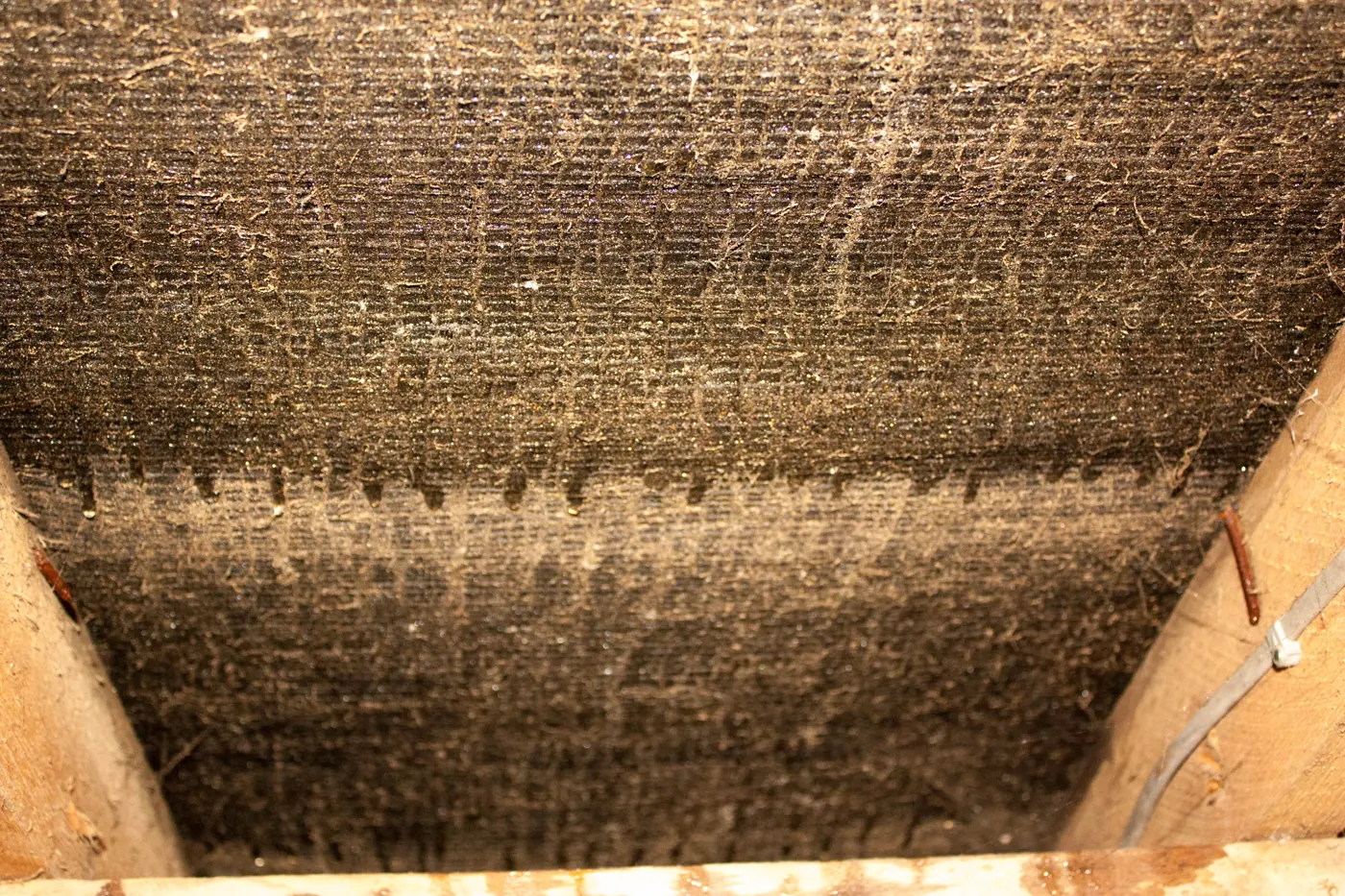
Those fins are packed tight, often 12 or more per inch. Anything your filter misses lands on them: dust, pet hair, drywall dust from a renovation. Because the coil is wet all summer, that dust sticks and turns into a mat that mold and bacteria can grow on.
Why Clean the Coil? What the Research Says
Airflow drops
Lawrence Berkeley National Laboratory found typical coils reach double their original airflow resistance in about 7.5 years, far short of a coil's 15–30 year life.
Efficiency and capacity drop
In typical systems the early loss is a few percent. It grows as the coil gets dirtier, and the RSES trade group reports neglected coils losing more than 20% of their efficiency.
Coils can freeze
Too little airflow lets the coil drop below freezing. Ice blocks even more air, and the system blows warm.
The compressor works harder
A dirty coil makes the system run longer to hit the thermostat setting. Longer run times mean more wear and higher bills.
Odors and growth
A wet, dirty coil is a good home for mold and bacteria. That's often the musty or "dirty sock" smell when the AC kicks on.
Drain problems
Debris washes off the coil into the drain pan and line. Clogs lead to overflow and water damage.
Coil cleaning won't fix a refrigerant leak, a bad compressor or a duct design problem. If we see signs of those, we'll tell you to call your HVAC contractor.
Signs Your Coil Needs Cleaning
One of these on its own may be something else. Two or three together usually point at the coil.
Weak airflow from the vents
AC runs and runs but the house stays warm
House feels humid even when cool
Musty or "dirty sock" smell at startup
Ice on the coil or the copper lines
Higher electric bills, same use
Water around the furnace or air handler
You just finished a renovation
Pets, or 2+ years since the last cleaning
Dry Clean vs. Wet Clean
Most coils need both. We do the dry clean first so the wet clean isn't just making mud.
Dry clean
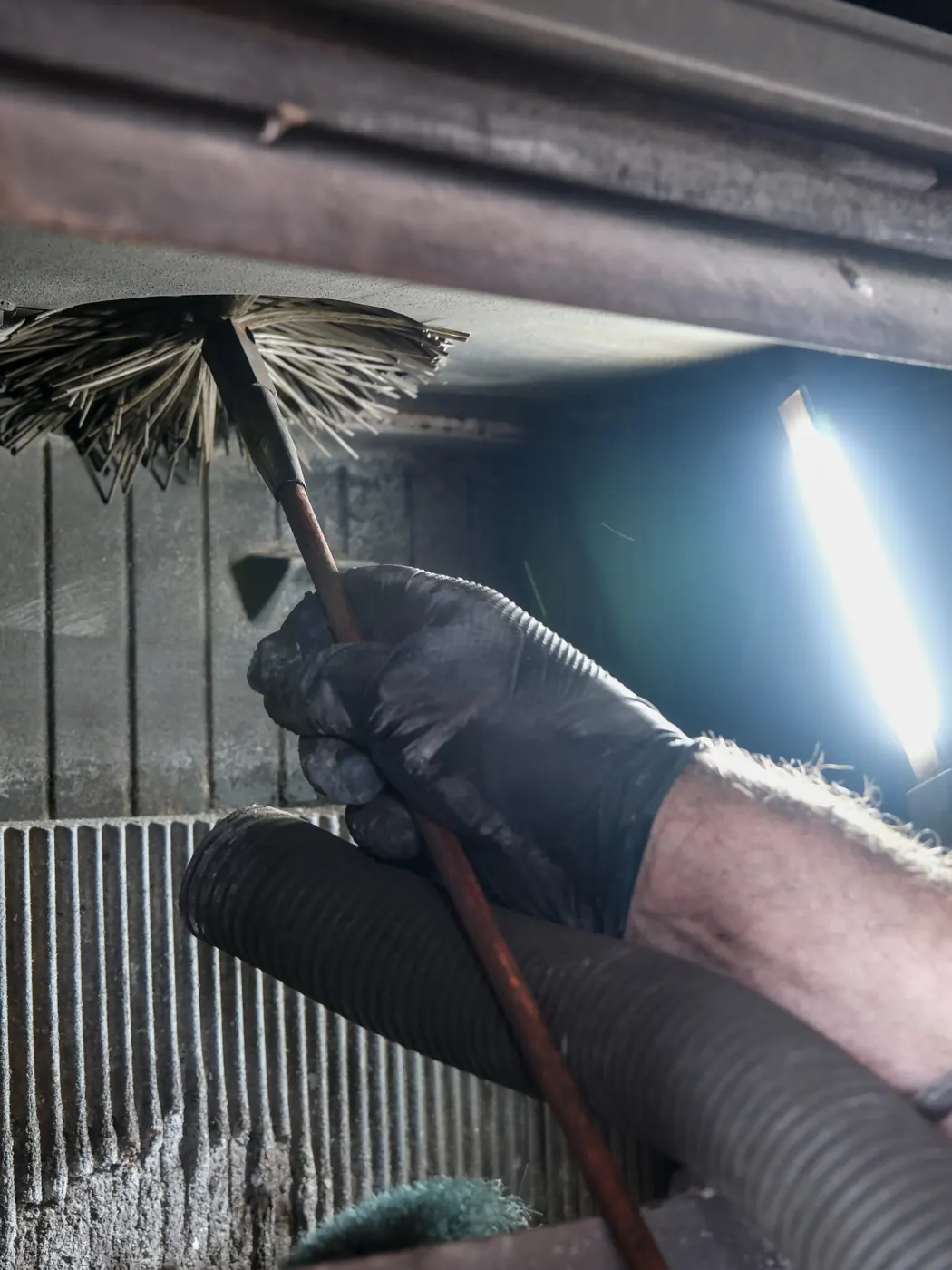
We vacuum and soft-brush the face of the coil, along the fins, to pull off the loose mat of dust and hair. This alone often opens up a lot of airflow.
Wet clean
We apply a coil-safe foaming cleaner, let it soak into the fins, then rinse at low pressure so the debris drains into the pan, not into your ducts. We never use bleach, acids or household cleaners, which can corrode aluminum fins and copper tubing.
How We Clean Your Coil
Step 1Power offWe shut the system off at the thermostat and the switch.
Step 2Open upWe open the coil access panel or plenum.
Step 3InspectWe check the coil, the pan and the drain before we touch anything.
Step 4Dry cleanVacuum and soft brush along the fins.
Step 5Wet cleanCoil-safe foaming cleaner, soak, low-pressure rinse.
Step 6Flush the drainWe clean the pan and flush the condensate line.
Step 7Close upAccess panel sealed back up.
Step 8TestSystem on, airflow and drainage checked.
What We Clean Off
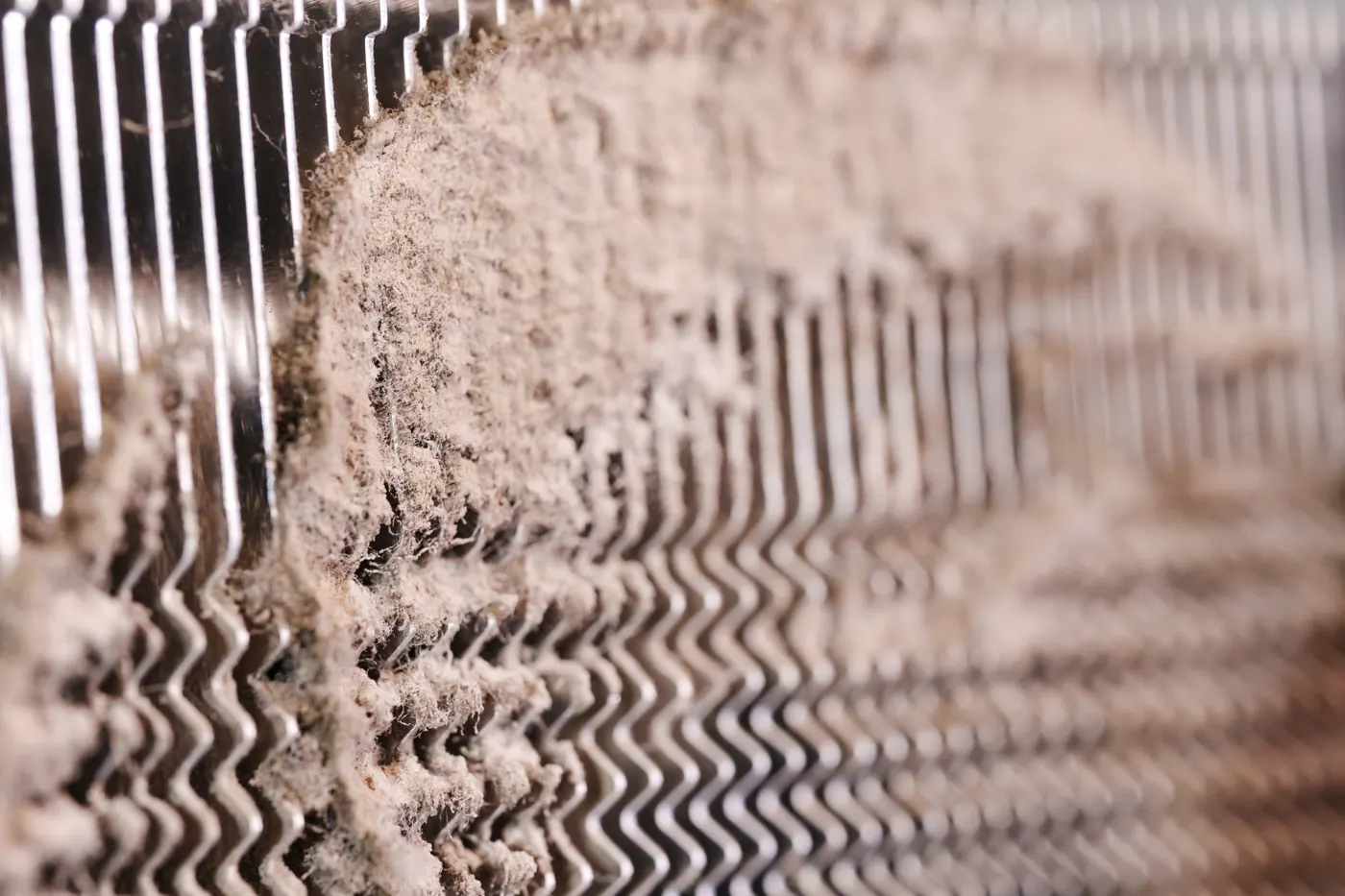
This is the kind of buildup a coil collects: a mat of dust and hair packed into the fins. Every job starts with a brush-and-vacuum dry clean to pull it off before the wet clean.
Upfront Prices
You get the price before we start.
Coil cleaning (wet + dry)
~$250
Typical residential evaporator coil, including the drain pan and line flush. Hard-to-reach coils or ones that need panels cut and sealed may cost more.
With duct cleaning
Best value
Cleaning the coil and the ducts together keeps the clean air you just paid for from blowing through a dirty coil. See air duct cleaning.
Coil Cleaning FAQ
How much does coil cleaning cost?
Typically about $250 for a residential evaporator coil, wet and dry clean, with the drain pan and line flushed. Hard-to-reach coils may cost more. You get the price before we start.
How often should the coil be cleaned?
Many manufacturers, including Bryant, recommend a yearly check, ideally in spring. Homes with pets, heavy dust or a recent renovation usually need a cleaning sooner.
What's the difference between a wet and dry coil cleaning?
A dry clean vacuums and brushes the loose dust off the face of the coil. A wet clean uses a coil-safe foaming cleaner and a low-pressure rinse to get the buildup out from between the fins. We do both.
Will coil cleaning lower my electric bill?
A cleaner coil lets your system move more air and shed heat more easily, which can shorten run times. How much you save depends on how dirty the coil was and the rest of your system.
Can you clean the outdoor unit too?
The outdoor condenser coil is part of your AC contractor's service. We focus on the indoor coil, which sits in the airflow your family breathes.
Does cleaning fix a frozen coil?
If the ice was caused by poor airflow from a dirty coil, cleaning usually solves it. If it was caused by low refrigerant, you'll need an HVAC contractor.
Sources: Lawrence Berkeley National Laboratory, "Dirty air conditioners: Energy implications of coil fouling" · RSES, "Clean Coils Lead to Improved Performance" · Bryant, "How to clean an evaporator coil" · Angi, "What happens when an evaporator coil gets dirty" · Environmental Heating & Cooling, signs a coil needs cleaning
Book a Coil Cleaning
Talk to a real person at our Woodbridge office. Mon–Fri 7am–5pm.